

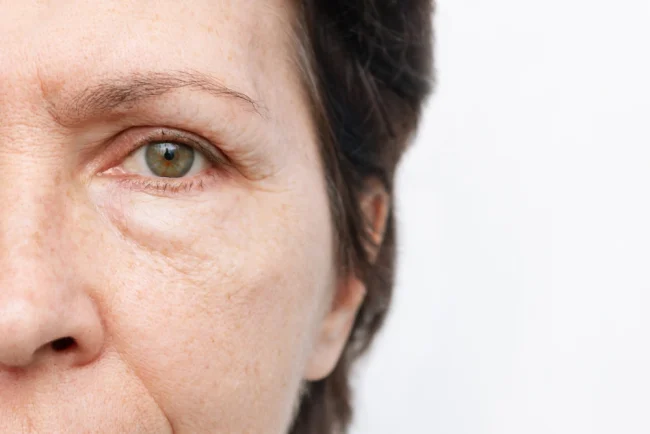
Waking up with puffy eyes is frustrating—but what’s causing that puffiness? Many patients assume they have “bags” under their eyes, only to discover the real culprit is something entirely different. The truth is, not all under-eye puffiness is created equal. Some cases stem from fluid retention (malar edema), while others result from actual fat pad prolapse (true under-eye bags). Understanding which condition you have is crucial, because the wrong treatment won’t deliver the results you’re hoping for.
At 740 Park Plastic Surgery, we’ve helped countless patients in Manhattan and beyond distinguish between these two conditions and find the right solution.
In this guide, we’ll break down the differences, explore what causes each, and walk you through your treatment options—from simple at-home remedies to advanced surgical procedures.
What Are Under-Eye Bags? Understanding the Two Main Types
When patients mention “bags under their eyes,” they’re typically referring to one of two distinct conditions: malar edema or true under-eye fat bags (orbital fat prolapse). While both create visible puffiness beneath the eyes, they have different causes and require different treatment approaches.
Malar Edema: Fluid Retention and Swelling
Malar edema refers to swelling in the malar region—the area of your cheekbones and lower eyelids. This puffiness is caused by fluid (lymphatic fluid or water retention) accumulating in the subcutaneous tissue beneath the skin. Think of it as localized swelling rather than structural fat bulging.
Key characteristics of malar edema:
- Soft, spongy appearance when you press on it
- Often worse in the morning or after sleeping
- May worsen with salt intake, dehydration, or allergies
- Typically affects both eyes symmetrically
- Can fluctuate throughout the day
True Under-Eye Fat Bags: Orbital Fat Prolapse
True under-eye bags result from orbital fat prolapse—the forward bulging of the fat pads that naturally sit beneath your eyes. As you age, the supporting structures (ligaments and muscles) weaken, allowing these fat compartments to protrude outward and downward.
Key characteristics of true under-eye bags:
- Firm, defined bulges that don’t compress easily
- Permanent appearance (doesn’t improve with rest or hydration)
- Often hereditary (runs in families)
- Creates a shadowed or hollowed appearance below the bulge
- Typically more pronounced in the morning but doesn’t fully resolve
What Causes Malar Edema?
Malar edema develops when fluid accumulates in the tissues beneath your eyes. Several factors can trigger this:
1. Allergies and Inflammation
Seasonal or year-round allergies trigger histamine release, causing localized swelling. If you notice your under-eye puffiness worsens during allergy season, this is likely your culprit.
2. Sleep Position and Fluid Retention
Sleeping on your stomach or side allows fluid to pool under your eyes overnight. Dehydration and excessive salt intake also contribute to fluid retention, making morning puffiness worse.
3. Lymphatic Drainage Issues
Your lymphatic system removes excess fluid from tissues. When lymphatic drainage is compromised—due to aging, sun damage, or lifestyle factors—fluid accumulates in the malar region.
4. Aging and Sun Damage
Over time, sun exposure breaks down collagen and elastin, weakening the skin’s ability to support proper fluid drainage. The delicate under-eye area is particularly vulnerable.
5. Lifestyle Factors
- Excessive salt consumption
- Dehydration
- Alcohol consumption
- Smoking
- Poor sleep quality
- High stress levels
What Causes True Under-Eye Fat Bags?
True under-eye bags develop due to structural changes in the eye area, primarily driven by:
1. Aging and Loss of Facial Support
As you age, the ligaments and muscles supporting your orbital fat weaken. Collagen and elastin break down, and the skin loses elasticity. This allows the fat pads to descend and bulge forward.
2. Genetics
If your parents or grandparents had prominent under-eye bags, you’re likely to develop them too. Genetics determine your facial structure, skin thickness, and how quickly your supporting tissues weaken.
3. Sun Damage and Photoaging
Chronic UV exposure accelerates collagen breakdown and weakens the structural support around your eyes. This is why people who spend significant time outdoors often develop bags earlier.
4. Lifestyle Factors
- Smoking (accelerates collagen loss)
- Poor sleep (contributes to tissue breakdown)
- Dehydration (reduces skin elasticity)
- High stress (elevates cortisol, affecting skin health)
- Excessive alcohol consumption
5. Hormonal Changes
Fluctuations in estrogen and other hormones can affect skin elasticity and fluid retention, particularly in women approaching menopause.
How to Tell the Difference: A Simple At-Home Test
Wondering which condition you have? Try this simple diagnostic test:
The Compression Test:
- Look in the mirror with good lighting
- Gently press your finger against the puffy area under your eye
- Hold for 3-5 seconds, then release
If the puffiness compresses and slowly returns to normal: You likely have malar edema (fluid retention). The fluid redistributes when you apply pressure.
If the puffiness doesn’t compress or feels firm: You likely have true under-eye fat bags. The bulge is structural fat, not fluid.
Note: Many patients have a combination of both conditions, which is why a professional evaluation is valuable for determining the best treatment approach.
Treatment Options for Malar Edema
The good news? Malar edema often responds well to non-surgical treatments, especially when caught early. Here’s what works:
Non-Surgical Treatments
1. Lifestyle Modifications
Start with these simple changes—they often make a significant difference:
- Sleep position: Sleep on your back to prevent fluid from pooling under your eyes
- Hydration: Drink adequate water daily (counterintuitively, dehydration causes fluid retention)
- Reduce salt intake: Cut back on processed foods and added salt
- Elevate your head: Use an extra pillow to promote fluid drainage
- Limit alcohol: Alcohol dehydrates and increases fluid retention
- Manage allergies: Use antihistamines or allergy medications as needed
- Quit smoking: Smoking impairs lymphatic drainage and collagen production
2. Topical Remedies
- Cold compresses: Apply chilled tea bags, jade rollers, or gel eye masks for 10-15 minutes each morning
- Caffeine-based eye creams: Caffeine constricts blood vessels and reduces swelling
- Retinol products: Improve skin elasticity and lymphatic function over time
- Vitamin C serums: Support collagen production and reduce inflammation
3. Professional Non-Surgical Treatments
- Lymphatic drainage massage: A specialized massage technique that encourages fluid movement away from the eye area
- Laser therapy (Endolift): Stimulates collagen production and improves lymphatic drainage
- Radiofrequency microneedling: Tightens skin and enhances lymphatic function
- Chemical peels: Improve skin texture and promote collagen remodeling
- Filler dissolving: If previous filler injections caused edema, dissolving them may resolve the issue
Surgical Treatment for Persistent Malar Edema
Direct Excision or Liposuction:
If conservative treatments don’t work after 3-6 months, surgical options include:
- Direct excision: Removing the swollen tissue directly
- Superficial suction lipectomy: Gently removing excess subcutaneous fat
- Midface lifting: Repositioning tissues to improve drainage and support
Recovery: 1-2 weeks downtime; results visible within 2-3 weeks
Treatment Options for True Under-Eye Fat Bags
True under-eye bags require more definitive treatment since they’re structural. Here’s what works:
Non-Surgical Treatments (Limited Effectiveness)
1. Topical Solutions
- Retinol and peptide creams: Improve skin firmness and may slightly reduce the appearance of bags
- Caffeine eye creams: Temporarily reduce puffiness but don’t address the underlying fat
- Sunscreen: Prevents further sun damage and collagen loss
Important note: Non-surgical topical treatments can only provide modest improvement for true fat bags. They work best as preventative measures or for very mild cases.
2. Injectable Treatments
- Dermal fillers: Strategically placed fillers can create shadow and contour, making bags appear less prominent
- Fat transfer: Repositioning your own fat can improve under-eye hollowness and create better contour
- Platelet-rich plasma (PRP): Stimulates collagen production for subtle skin tightening
Results: 6-12 months; requires maintenance
Surgical Treatments (Most Effective)
1. Lower Eyelid Blepharoplasty (Lower Lid Lift)
Blepharoplasty is the gold standard for true under-eye bags. The procedure involves:
- Transconjunctival approach: Incision made inside the lower eyelid (no visible scar)
- Fat repositioning or removal: Excess fat is carefully removed or repositioned to create a smooth contour
- Skin tightening: Excess skin is removed if needed
- Muscle tightening: The orbicularis oculi muscle is tightened for additional support
Recovery: 1-2 weeks visible improvement; full results at 3-4 weeks; final results at 3 months
2. Midface Lift with Blepharoplasty
For patients with significant sagging or festoons (severe malar bags with skin redundancy), a midface lift combined with blepharoplasty:
- Lifts and repositions the entire midface
- Releases retaining ligaments that contribute to sagging
- Combines with blepharoplasty for comprehensive rejuvenation
Recovery: 2-3 weeks downtime; full results at 2-3 months
3. Fat Transfer (Autologous Fat Grafting)
- Fat is harvested from another area of your body (typically abdomen or thighs)
- Purified and strategically injected to improve under-eye hollowness
- Creates a smoother transition and reduces the appearance of bags
Recovery: 1-2 weeks; results improve over 3-6 months as swelling resolves
4. Laser-Assisted Blepharoplasty
- Uses laser technology to precisely remove fat and tighten skin
- Reduces bleeding and promotes collagen remodeling
- Often combined with traditional blepharoplasty for optimal results
Recovery: Similar to traditional blepharoplasty (1-2 weeks)
Before Your Procedure: What to Expect
If you’re considering surgical treatment, here’s what the process typically involves:
Pre-Procedure Consultation
- Detailed evaluation to determine whether you have malar edema, fat bags, or both
- Discussion of realistic expectations and desired outcomes
- Review of your medical history and current medications
- Photography for before/after comparison
Pre-Procedure Preparation (1-2 Weeks Before)
- Stop blood thinners: Discontinue aspirin, ibuprofen, and supplements like fish oil (as directed by your surgeon)
- Avoid smoking: Smoking impairs healing; stop at least 2 weeks before surgery
- Limit alcohol: Alcohol increases bleeding and bruising
- Arrange transportation: You’ll need someone to drive you home
- Plan time off work: Most patients take 1-2 weeks off for visible recovery
After Your Procedure: Recovery and Results
Immediate Post-Operative Period (Days 1-3)
- Mild to moderate swelling and bruising (normal)
- Slight discomfort managed with prescribed pain medication
- Cold compresses applied regularly to reduce swelling
- Keep your head elevated, even while sleeping
- Avoid strenuous activity and heavy lifting
First Week
- Swelling peaks around day 3-4, then gradually improves
- Most patients can return to light activities
- Makeup can be applied to cover bruising
- Avoid swimming, saunas, and intense exercise
Weeks 2-4
- Significant improvement in swelling and bruising
- Most patients return to normal activities
- Results become increasingly visible
- Final contour continues to refine
Months 2-3
- Full results visible as all swelling resolves
- Scars (if any) begin to fade
- Skin continues to tighten and improve
Long-Term Results
- Results from blepharoplasty are typically permanent
- The aging process continues, but you’ll always look better than you would have without the procedure
- Many patients enjoy results for 10+ years
Frequently Asked Questions
Can I treat malar edema and under-eye fat bags at the same time?
Yes. Many patients have both conditions. A combined approach—addressing the fluid retention with lifestyle changes and non-surgical treatments, while surgically treating the fat bags—often delivers the best results.
How much does treatment cost?
Non-surgical treatments range from $0 (lifestyle changes) to $2,000-$5,000 (professional treatments like laser or radiofrequency). Surgical blepharoplasty typically ranges from $4,000-$8,000, depending on complexity. We offer a complimentary consultation to discuss your specific needs and pricing.
Will my results look natural?
Absolutely. Modern blepharoplasty techniques are designed to create subtle, natural-looking results. The goal is to refresh your appearance, not dramatically change it. We focus on creating smooth contours and a well-rested appearance.
How long do results last?
Surgical results are permanent. The fat doesn’t return, and the skin tightening is long-lasting. However, the natural aging process continues, so some patients choose to have touch-up procedures years later.
Can I combine blepharoplasty with other procedures?
Yes. Many patients combine lower eyelid blepharoplasty with upper eyelid blepharoplasty, midface lifting, or other facial rejuvenation procedures for comprehensive results.
What are the risks?
Blepharoplasty is generally safe, but like any surgery, it carries risks including infection, bleeding, asymmetry, and dry eyes. During your consultation, we’ll discuss these in detail and explain how we minimize them.
When can I wear makeup again?
You can apply makeup around the eye area after 1 week, once any open incisions have healed. Avoid direct contact with incision sites.
Ready to Address Your Under-Eye Concerns?
Whether you’re dealing with malar edema, true under-eye fat bags, or a combination of both, 740 Park Plastic Surgery has the expertise and advanced techniques to help. Dr. Stafford Broumand and our team specialize in subtle, natural-looking eye rejuvenation that leaves you looking refreshed—not overdone.
The first step is a comprehensive consultation. We’ll evaluate your specific concerns, determine which condition you have, and discuss the treatment options that will deliver the results you’re looking for.
Schedule your consultation today and discover how we can help you achieve the bright, refreshed eyes you deserve.