

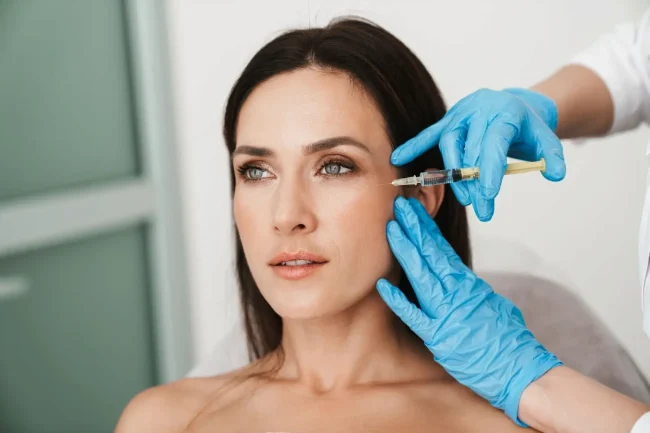
You’ve probably heard the saying: “An ounce of prevention is worth a pound of cure.” When it comes to your skin, this wisdom couldn’t be more accurate. While most people think of BOTOX® as a treatment for existing wrinkles, a growing number of dermatologists and plastic surgeons—including Dr. Stafford Bromand at 740 Park Plastic Surgery—are championing a revolutionary approach called prejuvenation: using preventative neurotoxins in your late 20s and early 30s to stop wrinkles before they even start.
This isn’t about looking frozen or unnatural. It’s about understanding the science of facial aging and taking proactive steps to maintain your skin’s youthful appearance for decades to come. In this guide, we’ll explore how BOTOX and other neurotoxins work at a cellular level, when you should consider starting preventative treatments, and how to achieve natural-looking results that keep you looking refreshed—not overdone.
What Is Prejuvenation? Understanding the Preventative Approach
Prejuvenation is a paradigm shift in aesthetic medicine. Rather than waiting until wrinkles become deeply etched into your skin, prejuvenation involves starting preventative treatments in your late 20s to early 30s—before visible signs of aging appear.
The logic is simple: expression lines form over decades of repetitive facial movements. Every time you smile, frown, or raise your eyebrows, your facial muscles contract. Over time, these contractions create creases in the skin. By the time wrinkles become visible, the damage is already done—and correcting deep wrinkles requires more aggressive treatment.
Preventative neurotoxins interrupt this cycle by gently relaxing the muscles responsible for expression lines, preventing those lines from deepening in the first place. Think of it as maintaining your skin’s “youth capital” rather than trying to rebuild it after it’s been depleted.
Key Benefits of Starting Early:
- Prevents expression lines from forming or deepening
- Requires lower doses than corrective treatments
- Maintains natural facial expressions and movement
- Reduces the need for more invasive procedures later
- Allows for a gradual, subtle approach to anti-aging
The Science Behind Facial Aging: Why Your Skin Changes
To understand why preventative BOTOX works, you need to understand what happens to your skin as you age.
Collagen and Elastin: The Foundation of Youthful Skin
Your skin’s youthful appearance depends on two critical proteins: collagen and elastin. These proteins provide structure, firmness, and elasticity to your skin. Unfortunately, your body begins producing less collagen and elastin starting in your mid-20s—declining by approximately 1-2% each year.
By your 30s, this decline becomes noticeable. Your skin loses its plumpness, fine lines begin to appear, and your complexion may start to look less radiant. By your 40s and 50s, if no preventative measures have been taken, deeper wrinkles and sagging become more pronounced.
How Expression Lines Form
Expression lines develop through a process called muscle memory. Every time you contract a facial muscle—whether you’re smiling, frowning, or concentrating—the skin above that muscle folds. Initially, these folds disappear when you relax your face. But with decades of repetition, the skin loses its elasticity and the folds become permanent wrinkles.
The most common areas for expression lines include:
- Forehead: Horizontal lines from raising your eyebrows
- Between the brows: Vertical “11” lines from frowning or concentrating
- Crow’s feet: Lines radiating from the corners of your eyes from smiling and squinting
How BOTOX and Neurotoxins Work: The Mechanism Explained
BOTOX is a brand name for botulinum toxin type A, a neurotoxin produced by the bacterium Clostridium botulinum. While the word “toxin” might sound alarming, BOTOX has been safely used in cosmetic medicine for over two decades and is FDA-approved for treating dynamic wrinkles.
The Neuromuscular Junction: Where the Magic Happens
Here’s how BOTOX works at a cellular level:
- Injection: A small amount of BOTOX is injected directly into the facial muscle responsible for expression lines.
- Blocking Acetylcholine: BOTOX blocks the release of a neurotransmitter called acetylcholine at the neuromuscular junction—the point where nerves communicate with muscles.
- Muscle Relaxation: Without acetylcholine, the muscle cannot contract. The muscle gradually relaxes over 3-7 days, with full results appearing within 2 weeks.
- Wrinkle Prevention: As the muscle relaxes, the skin above it smooths out. New expression lines cannot form because the muscle isn’t contracting as forcefully.
- Temporary Effect: The body gradually regenerates acetylcholine receptors over 3-4 months, which is why BOTOX results last approximately 3-4 months. Maintenance treatments are needed to sustain results.
Why Preventative Doses Are Different
When used preventatively, BOTOX is administered in lower doses than corrective treatments. This approach:
- Softens muscle contractions without eliminating them entirely
- Preserves natural facial expressions and movement
- Prevents the “frozen” or “overdone” appearance
- Allows your face to look refreshed rather than treated
When Should You Start Preventative BOTOX? The Right Age
One of the most common questions we hear is: “Am I too young to start BOTOX?” The answer depends on several factors.
Recommended Starting Ages by Skin Type and Genetics
Late 20s to Early 30s: This is the ideal window for most people to begin preventative treatments. At this age:
- Expression lines are just beginning to form
- Your skin still has good elasticity
- Lower doses are effective
- You can establish a maintenance routine before deeper wrinkles develop
Genetic Factors Matter: If you have a family history of deep wrinkles or early aging, you may benefit from starting preventative treatments in your late 20s. Conversely, if your family members age slowly, you might wait until your early 30s.
Lifestyle Considerations: Sun exposure, smoking, stress, and sleep quality all accelerate skin aging. If you have significant sun damage or other risk factors, starting preventative treatments earlier may be beneficial.
Signs You’re Ready for Preventative BOTOX
You might be a good candidate for preventative neurotoxins if you notice:
- Fine lines appearing when you make facial expressions (that disappear at rest)
- Early “11” lines between your brows
- Slight forehead lines when you raise your eyebrows
- Crow’s feet beginning to form at the corners of your eyes
- A desire to maintain your current appearance proactively
The Preventative BOTOX Treatment Process: What to Expect
Before Your Appointment
- Avoid blood thinners: Stop taking aspirin, ibuprofen, and other NSAIDs for 24-48 hours before your appointment to minimize bruising
- Skip alcohol: Avoid alcohol for 24 hours before treatment
- Plan your timing: Schedule your appointment at least 2 weeks before an important event (though results continue improving for up to 2 weeks)
- Come with a clean face: Arrive with minimal makeup for accurate assessment
During the Procedure
The preventative BOTOX procedure is quick—typically 10-15 minutes—and requires no anesthesia, though some patients appreciate a topical numbing cream.
The Steps:
- Dr. Bromand assesses your facial anatomy and discusses your aesthetic goals
- Treatment areas are marked (typically forehead, between brows, and crow’s feet)
- Small injections are administered using a fine needle
- Ice is applied to minimize swelling and bruising
- You’re free to leave immediately—no downtime required
After Your Appointment
- Avoid touching the treated areas: For at least 4 hours, don’t massage or apply pressure to injection sites
- Stay upright: Remain in an upright position for 4 hours to prevent the product from migrating
- Skip intense exercise: Avoid strenuous activity for 24 hours
- No facials or massages: Wait at least 1 week before scheduling other facial treatments
- Results timeline: You’ll notice softening of expression lines within 3-7 days, with full results by 2 weeks
Achieving Natural Results: The Art of Preventative BOTOX
One of the biggest concerns patients have about BOTOX is ending up with a “frozen” face or an obviously treated appearance. With preventative treatments and proper technique, this is entirely avoidable.
The Key to Natural-Looking Results
Lower doses: Preventative BOTOX uses lower doses than corrective treatments, allowing subtle muscle relaxation while preserving natural movement.
Strategic placement: Dr. Bromand focuses on the specific muscles responsible for expression lines, rather than over-treating the entire face.
Preserving facial expressions: The goal is to soften lines while maintaining your ability to smile, frown, and express emotion naturally. You should still be able to raise your eyebrows, furrow your brow, and show all your natural expressions—just with smoother skin.
Gradual approach: Starting preventative treatments early means you can take a gradual, subtle approach. Small adjustments over time look far more natural than dramatic changes.
What Natural Results Look Like
With preventative BOTOX, you should notice:
- Softened expression lines, especially when you make facial expressions
- Smoother forehead and between-brow area
- Reduced crow’s feet
- A refreshed, well-rested appearance
- The ability to move your face naturally and express emotion
- Compliments like “You look well-rested” rather than “You look like you’ve had work done”
Combining Preventative Treatments: A Holistic Approach
While preventative BOTOX is powerful on its own, many patients achieve optimal results by combining it with complementary treatments and skincare.
Advanced Skincare: The Foundation
Before and after your BOTOX treatments, a robust skincare routine is essential:
- Sunscreen (SPF 30+): UV damage accelerates collagen breakdown. Daily sunscreen is non-negotiable
- Retinoids: Prescription retinoids like tretinoin stimulate collagen production and improve skin texture
- Vitamin C serums: Antioxidants protect against environmental damage and brighten skin
- Hyaluronic acid: Hydration plumps fine lines and improves skin elasticity
- Moisturizers: A good moisturizer supports your skin barrier and maintains hydration
Lifestyle Factors That Enhance Results
Your preventative BOTOX results are only as good as your overall skin health:
- Sleep: Aim for 7-9 hours nightly; poor sleep accelerates aging and increases cortisol
- Stress management: Chronic stress increases cortisol, which breaks down collagen
- Hydration: Drink plenty of water to maintain skin hydration from within
- Nutrition: Antioxidant-rich foods (berries, leafy greens, fatty fish) support skin health
- Avoid smoking: Smoking dramatically accelerates skin aging and reduces treatment efficacy
Maintenance and Timeline: What to Expect Long-Term
The First Year: Building Your Baseline
Most patients benefit from an initial series of 2-3 treatments spaced 2 weeks apart to establish optimal results. After this initial series:
- Months 1-3: Full results from your first treatment
- Month 3-4: Results begin to fade; schedule your second maintenance treatment
- Months 4-12: Continue maintenance treatments every 3-4 months
Long-Term Maintenance
Once you’ve established your baseline with preventative BOTOX:
- Maintenance frequency: Most patients require touch-ups every 3-4 months
- Consistent results: Regular maintenance prevents expression lines from deepening
- Lower doses over time: Some patients find they need slightly lower doses as their muscles adapt
- Cost-effectiveness: Starting preventative treatments early often costs less long-term than waiting and requiring corrective treatments later
What Happens If You Stop?
If you discontinue BOTOX treatments:
- Results gradually fade over 3-4 months
- Your facial muscles return to normal function
- Expression lines may gradually reappear, but they won’t be worse than if you’d never had treatment
- You can restart treatments at any time
Addressing Common Misconceptions About Preventative BOTOX
“Won’t I become dependent on BOTOX?”
No. BOTOX is not addictive. Your body doesn’t develop a physical dependence on the treatment. If you stop, your muscles simply return to normal function. However, many patients choose to continue because they enjoy the results and the preventative benefits.
“Is it safe to start BOTOX in my 20s?”
Yes, when administered by a qualified professional. BOTOX has been safely used in cosmetic medicine for over 20 years. Starting preventative treatments in your late 20s or early 30s is increasingly common and recommended by leading dermatologists and plastic surgeons.
“Will BOTOX make my face look frozen?”
Not with preventative doses and proper technique. Preventative BOTOX uses lower doses specifically designed to soften expression lines while preserving natural movement. The “frozen” appearance typically results from over-treatment, which is avoided with a conservative, preventative approach.
“How much does preventative BOTOX cost?”
Costs vary based on the number of units needed and your geographic location. Preventative treatments typically require fewer units than corrective treatments, making them more affordable. Many practices offer package pricing for maintenance treatments. During your consultation, Dr. Bromand will provide transparent pricing based on your specific needs.
“Can I combine BOTOX with other treatments?”
Absolutely. BOTOX works well with dermal fillers, laser treatments, skincare, and other aesthetic procedures. In fact, a comprehensive approach often yields superior results. Dr. Bromand will recommend a personalized treatment plan based on your goals.
Why Choose 740 Park Plastic Surgery for Preventative BOTOX?
At 740 Park Plastic Surgery, Dr. Stafford Bromand specializes in creating natural, refreshed results that enhance your appearance without looking overdone. His approach to preventative BOTOX is rooted in:
- Artistic expertise: Dr. Bromand understands facial anatomy and aesthetics at a deep level, ensuring results that complement your unique features
- Conservative philosophy: He believes in starting with lower doses and building gradually, prioritizing natural results
- Personalized treatment plans: Every patient is different. Dr. Bromand tailors his approach to your specific concerns, goals, and facial structure
- Cutting-edge techniques: He stays current with the latest advances in aesthetic medicine and preventative treatments
- Patient education: Dr. Bromand takes time to explain the science behind treatments, ensuring you make informed decisions
Frequently Asked Questions About Preventative BOTOX
How long does a BOTOX appointment take?
The procedure itself takes 10-15 minutes. With consultation and aftercare instructions, plan for 30-45 minutes total.
When will I see results?
You’ll notice softening of expression lines within 3-7 days. Full results appear by 2 weeks.
Can I return to work immediately after BOTOX?
Yes. There’s no downtime with preventative BOTOX. You can return to normal activities immediately, though we recommend avoiding intense exercise for 24 hours.
How often do I need maintenance treatments?
Most patients require touch-ups every 3-4 months to maintain results.
Are there any side effects?
Side effects are rare and typically mild, including temporary redness, swelling, or bruising at injection sites. Serious complications are extremely uncommon when administered by a qualified professional.
Can I combine BOTOX with dermal fillers?
Yes. Many patients benefit from combining BOTOX (which relaxes muscles) with fillers (which add volume). Dr. Bromand can recommend the best combination for your goals.
What’s the difference between preventative and corrective BOTOX?
Preventative BOTOX uses lower doses to stop expression lines from forming. Corrective BOTOX uses higher doses to treat existing wrinkles. Starting preventatively often prevents the need for corrective treatments later.
Take the Next Step: Schedule Your Preventative BOTOX Consultation
The best time to start preventative BOTOX is now. Whether you’re in your late 20s noticing the first fine lines or in your 30s wanting to maintain your youthful appearance, Dr. Stafford Bromand at 740 Park Plastic Surgery can help you develop a personalized prejuvenation plan.
During your consultation, Dr. Bromand will:
- Assess your facial anatomy and skin condition
- Discuss your aesthetic goals and concerns
- Explain how preventative BOTOX can benefit you specifically
- Answer all your questions in detail
- Provide transparent pricing and treatment recommendations
Don’t wait for deep wrinkles to develop. Take a proactive approach to aging with preventative BOTOX at 740 Park Plastic Surgery.
Schedule Your Consultation Today or call us at (646) 681-7607 to book your appointment.